
June 25, 2026
Waterfront homes in Mason County can feel like a dream come true, but they also come with details that are easy to miss if you treat them like any other purchase. If you are eyeing a place on Hood Canal, South Puget Sound, Lake Cushman, or along the Skokomish River, you need more than a standard home tour and a quick inspection. The good news is that with the right questions and the right local guidance, you can move forward with clarity and confidence. Let’s dive in.
Mason County waterfront is not one single category. A property may have marine frontage, freshwater shoreline, or river frontage, and those settings can come with different shoreline rules and review paths.
The county uses shoreline environmental designations such as residential, rural, conservancy, natural, aquatic, and commercial. That means two properties that look similar online may have very different development limits, permitting steps, or long-term use considerations.
Another key point is shoreline jurisdiction. In Mason County, preliminary shoreline jurisdiction can include the ordinary high water mark, a 200-foot landward area, FEMA floodplain areas within 200 feet of a floodway, and associated wetlands. The county also notes that the actual jurisdiction must be confirmed through a site-specific evaluation.
Before you remove contingencies, confirm what shoreline designation applies to the property. This helps you understand how the site is managed and what rules may affect future plans.
Some Mason County shorelines, including Hood Canal, South Puget Sound marine waters seaward from extreme low tide, Lake Cushman, and part of the Skokomish River, are classified as shorelines of statewide significance. The county manages these areas with priority for long-term public benefit, ecological protection, public access, and recreation.
For you as a buyer, that matters if you plan to add, replace, or modify features near the shoreline. It can affect what is allowed, what studies may be needed, and how long approval may take.
One of the biggest waterfront surprises is that ownership and use rights near the water are not always as simple as they seem. In Washington, water boundaries can be dynamic and legally complex.
The Washington Department of Natural Resources says aquatic lands can include state-owned tidelands, shorelands, harbor areas, and beds of navigable waters. In practical terms, a waterfront lot may not give you full control all the way to the water’s edge or over structures located waterward of the ordinary high water mark.
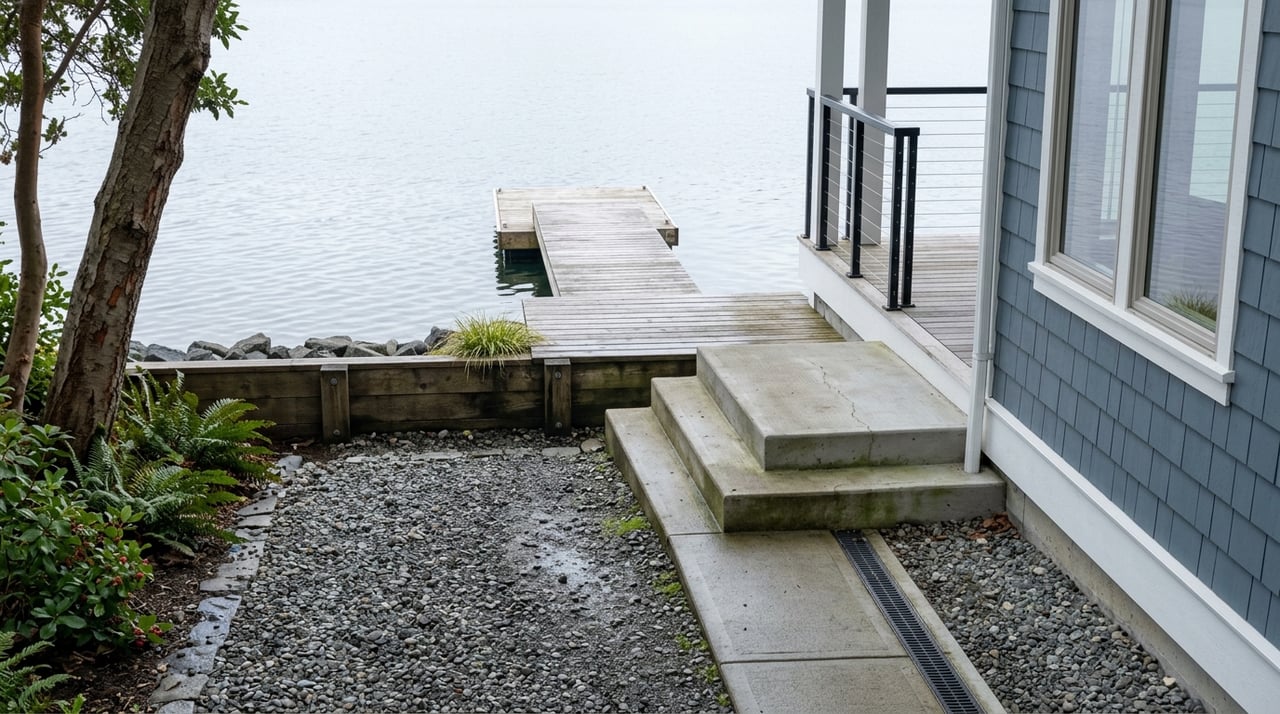
If a property has a dock, buoy, boathouse, or similar improvement, do not assume it is fully authorized just because it exists. Projects on or over state-owned aquatic lands may require DNR authorization in addition to other permits.
Waterfront value often depends on how you can actually use the property. That is why access, existing improvements, and permit history should be checked early in the process.
Ask whether beach access, a dock, a buoy, stairs, or retaining features are located on the subject property, on an easement, or partly on state-owned aquatic lands. Also ask whether permits or approvals exist for those improvements and whether any future repair or replacement would trigger additional review.
This is one of the areas where a local broker, title professional, survey support, and permitting insight can save you from expensive assumptions. A beautiful shoreline feature is only as useful as its legal and practical path forward.
Many buyers fall in love with a waterfront property based on what they hope to do later. Maybe you want to stabilize a bank, rebuild stairs, improve access, or add shoreline features. In Mason County, it is smart to understand the likely permit path before you commit.
The county’s shoreline materials say shoreline development must conform with the Shoreline Master Program. They also note that shoreline exemptions are construed narrowly, and if any part of a proposal is not eligible for exemption, a shoreline substantial development permit may be required for the whole project.
The county’s bulkhead permitting guide says shoreline development should be reviewed with Washington Department of Fish and Wildlife before permits are submitted. It also recommends a site pre-inspection with a planner and habitat biologist.
A complete permit package can be more involved than buyers expect. Depending on the project, it may include SEPA review, a shoreline exemption or JARPA, a building permit, a Mason environmental permit with habitat management plan, and a shoreline substantial development permit.
A standard home inspection is important, but it is not enough for every waterfront purchase. In Mason County, bluff conditions, erosion history, slope stability, and existing shoreline armoring deserve separate attention.
The county’s Shoreline Master Program emphasizes that new development should be located and designed to avoid future shoreline stabilization when feasible. For some primary structures and shoreline modifications, the county expects a shoreline geotechnical assessment or report showing stabilization is unlikely to be needed during the life of the structure.
That matters because shoreline stabilization is not always easy to add later. New structural stabilization generally needs proof that the site is threatened by natural erosion and that softer approaches are not feasible.
Many buyers assume a bulkhead is the default answer for shoreline protection. Mason County takes a more limited approach.
The county’s bulkhead guide says hard methods like concrete and rock are allowed only when softer measures are not feasible. Softer approaches can include vegetation enhancement, upland drainage control, biotechnical measures, beach enhancement, anchor trees or root wads, and gravel placement.
The same guide notes that setback is the long-term way to reduce storm and erosion risk and that many shoreline properties do not actually need a bulkhead. If a property already has armoring, it is worth asking how it has performed and what future repair rules may apply.
Shoreline rules and flood risk are related, but they are not the same thing. A property can raise questions under both.
FEMA’s Flood Map Service Center is the official public source for flood hazard information. If a building is in a Special Flood Hazard Area in an NFIP community, federally regulated, supervised, or agency lenders require flood insurance.
For buyers, this means flood review should happen early. Insurance cost, lender requirements, and long-term ownership expense can all be affected, even if the home itself appears well above the water.
Many Mason County waterfront homes rely on systems that need more verification than a city utility setup. If a property has a private well or on-site septic system, make those records part of your due diligence from the start.
For private wells, Washington DOH says the owner is responsible for testing the water and recommends annual testing for coliform bacteria and nitrate. Mason County’s well-siting guidance also says private wells should be placed on the highest ground possible, protected from the 100-year flood, and kept away from septic systems, manure lagoons, and sea-salt water intrusion areas.
On septic, Mason County says buyers and residents seeking septic permits should work through the county health department. The county also notes that maintenance schedules vary by system type, with some conventional gravity systems inspected every three years and several other system types inspected annually.
Utility placement can also be more complicated on shoreline parcels. The county notes that utility permits may be required for work in or near rights-of-way, including road crossings for water or septic lines.
If you are buying marine waterfront and plan to enjoy shellfish harvesting or simply want a clearer picture of local water conditions, water quality may be worth reviewing. Washington DOH maintains commercial shellfish growing area maps and evaluates those areas annually.
The department notes that fecal pollution sources can reduce marine water quality and close shellfish beds. That does not mean every nearby property has an issue, but it is a practical check if your intended use includes shellfish-related recreation or if marine water conditions are a priority for you.
Waterfront purchases often call for a broader team than a standard home purchase. Depending on the property, you may need support from a local broker, home inspector, title or survey professional, and specialists in geotechnical review, septic, wells, or permitting.
The goal is not to make the process feel overwhelming. It is to answer the biggest questions before you are fully committed so you can move ahead with confidence instead of crossing your fingers.
If you want a simple way to stay organized, start with these questions:
A Mason County waterfront home can offer an incredible lifestyle, but confidence comes from careful planning, not assumptions. When you understand shoreline designation, ownership boundaries, flood exposure, utility readiness, and permit complexity up front, you put yourself in a much stronger position.
That is where local, concierge-level guidance can make a real difference. If you are considering a waterfront purchase in Mason County and want experienced, practical support from the start, connect with Infinity Real Estate to schedule a free consultation.
Stay up to date on the latest real estate trends.
Retirement
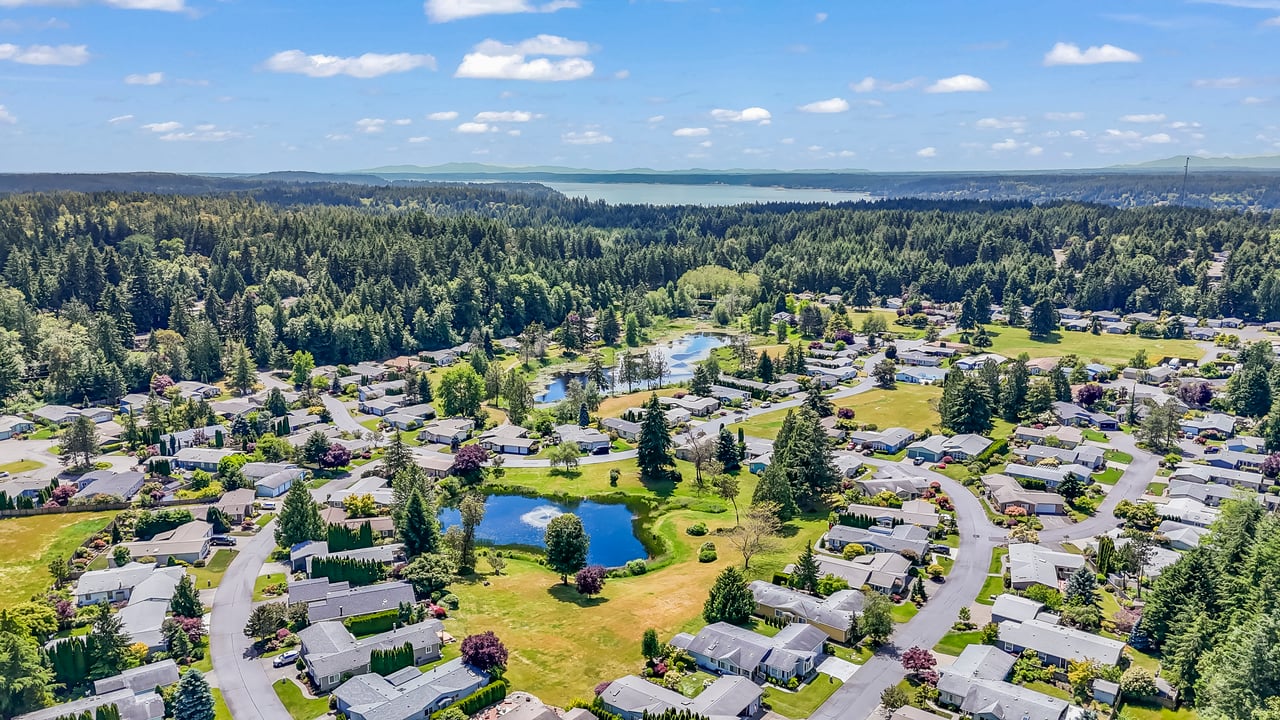
If you are looking for single-level living, lower maintenance, gated security, and a vibrant social lifestyle in Western Washington, The Lakes at Gig Harbor is a premi… Read more

We pride ourselves in providing personalized solutions that bring our clients closer to their dream properties and enhance their long-term wealth. Contact us today to find out how we can be of assistance to you!
Infinity Real Estate
4221 Harborview Dr Gig Harbor, WA 98332