
October 8, 2026
"We are now finding cracks and failures in the large steel joints with increasing frequency," the Washington State Department of Transportation wrote in a September 2026 blog post about the westbound Tacoma Narrows Bridge. "We weld new steel and add support structures where we can. But with each new temporary repair, the joints deteriorate more."
The bridge in that quote is the 1950 span that carries traffic from Tacoma to Gig Harbor. Nobody pays a toll on it. The toll you see quoted in every Gig Harbor commute comparison is collected on the other span, the eastbound bridge that opened in 2007. That one is on a published schedule to be paid off. For anyone weighing a Gig Harbor address and a daily crossing, those two bridges are now on different paths, and over the next few years the gap between them matters more than the toll rate.
Washington law keeps the money for each span separate. WSDOT's Olympic Region communications manager, Cara Mitchell, told Tacoma Weekly that tolls on the eastbound span cover "the operations, maintenance, preservation and insurance costs for the eastbound bridge," and that "repairs to the westbound bridge are paid through limited preservation funding." The paper reported that toll revenue is restricted and can't be used for work on the westbound bridge.
| Eastbound span | Westbound span | |
|---|---|---|
| Direction | Gig Harbor to Tacoma | Tacoma to Gig Harbor |
| Opened | 2007 | 1950 |
| Tolled | Yes | No |
| Who pays for upkeep | Toll revenue | WSDOT statewide maintenance and preservation budget |
| Where it stands | Debt service projected to finish FY 2030, state loans repaid by FY 2032 | 10 rounds of emergency repairs since 2024, full joint replacement planned for 2027 |
So the bridge with the price tag is the one in better financial shape. The free bridge is the one with the repair backlog and no dedicated revenue stream.
As of October 2026, the Washington State Transportation Commission still lists the two-axle eastbound toll at $4.50 with a Good To Go pass, $4.75 Pay By Plate, $5.50 at the booth, and $6.50 Pay By Mail. Those rates have been in effect since October 1, 2022. You pay only when leaving Gig Harbor, so a round trip costs one toll.
Here's the arithmetic for a hypothetical commuter who crosses 250 workdays a year. That's about $1,125 at the pass rate and $1,625 if every crossing is billed by mail. The $500 gap comes entirely from how the toll gets paid.
The rate has held steady because of two legislative decisions:
The commission's latest loan update is dated January 21, 2026. It expects debt service to finish in FY 2030 and loan repayment to end in FY 2032. Under state law, the bridge becomes toll-free once those obligations are paid. State Rep. Jake Fey, the Tacoma Democrat who chairs the House transportation committee, put it as June 2032 under current revenue projections. State Rep. Adison Richards, a Gig Harbor Democrat, wrote that the bridge "is on schedule to be paid off in 2032."
The forecast has also improved. Total expected borrowing dropped to $72.4 million, $11.96 million less than the 2025 estimate. The biggest single reason was an $8.1 million increase in projected civil penalties and recovered toll revenue. Ordinary toll revenue rose only $185,000. In other words, collecting from unpaid crossings did far more to speed up the payoff than growth in regular traffic.
These are projections. An earlier 2024 forecast had tolling running into FY 2033 before the 2026 update moved it up. So treat 2032 as the current estimate, not a guaranteed date.
None of the toll money reaches the westbound bridge, and its 2026 record shows why that matters. It carries an average of 45,000 vehicles a day from Tacoma to Gig Harbor, based on 2024 data WSDOT cited. Here's what this year has looked like:
Repair counts vary by source. WSDOT's September blog counts 10 rounds of emergency repairs since 2024, with eight of them near the large expansion joints. An earlier WSDOT advisory gave annual totals that don't quite add up to that.
The work continues after the joints. In April, WSDOT told The Olympian the westbound span needed nearly $180 million in short-, mid- and long-term work. That included about $12 million in near-term items, a $110 million painting project, and roughly $58 million for deck rehab and cable dehumidification. By September, WSDOT said "just over $300 million is programmed through 2031 for preservation projects specific to the westbound bridge," including painting the deck truss and towers within five years. Those two figures come from different points in the year and measure different things, so this post doesn't try to reconcile them. Either way, the westbound span is scheduled for years of preservation work running roughly in parallel with the toll payoff.
Toll comparisons usually look at the morning trip, when the toll is charged. The disruptions in 2026 have hit the opposite direction. Almost every closure listed above was on the westbound span, and the planned October work targets the right lanes and the Jackson Avenue on-ramp that Tacoma-side commuters use to get home.
For a buyer, that suggests a few practical steps:
Rep. Fey told The Olympian he doesn't hear many complaints about the toll anymore, and that people appreciate getting across more easily than in the single-span days. If that holds, the toll is no longer the main commute risk. The bigger variable is how many afternoons the westbound span runs with lanes closed.
Will the Narrows toll go up before it ends? The commission's 2026 annual tolling report showed no base-rate change for the Narrows in 2025. The research found no rate change scheduled as of October 2026. Rep. Richards wrote that lawmakers "kept tolls from going up" in the last session.
Could tolls continue after 2032 to fund maintenance? A 2024 News Tribune story mentioned continued tolling as something the Legislature could choose, but called the idea speculative. As of October 2026, the commission's page still says the facility becomes toll-free once its obligations are paid.
Is the westbound bridge safe? WSDOT has said it would close the bridge if it weren't structurally safe, and that bridges commonly last well past 80 years with proper preservation.
If a daily Narrows crossing is part of your Gig Harbor plan, Infinity Real Estate can help you time showings, closings and move dates around WSDOT's work calendar so the afternoon drive home doesn't catch you off guard. Schedule a free consultation and we'll look at the commute together.
Stay up to date on the latest real estate trends.
Retirement
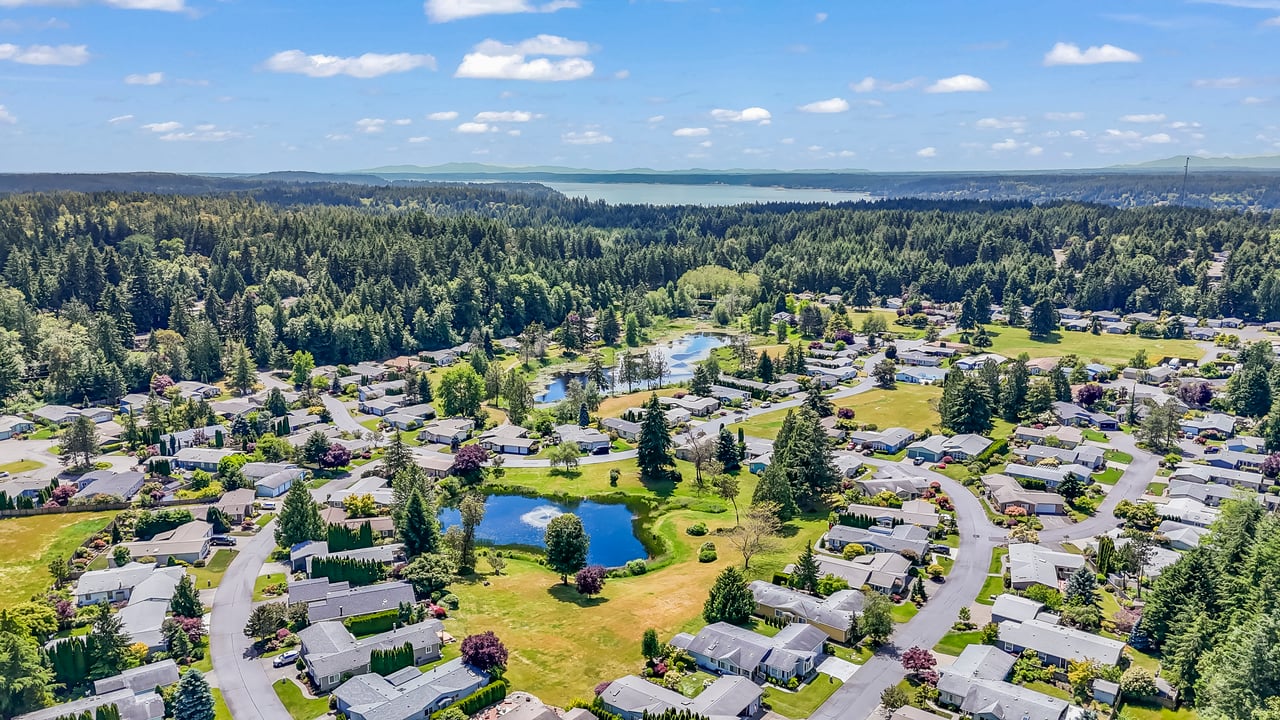
If you are looking for single-level living, lower maintenance, gated security, and a vibrant social lifestyle in Western Washington, The Lakes at Gig Harbor is a premi… Read more

We pride ourselves in providing personalized solutions that bring our clients closer to their dream properties and enhance their long-term wealth. Contact us today to find out how we can be of assistance to you!
Infinity Real Estate
4221 Harborview Dr Gig Harbor, WA 98332